
November 2, 2026
Vancouver, B.C.
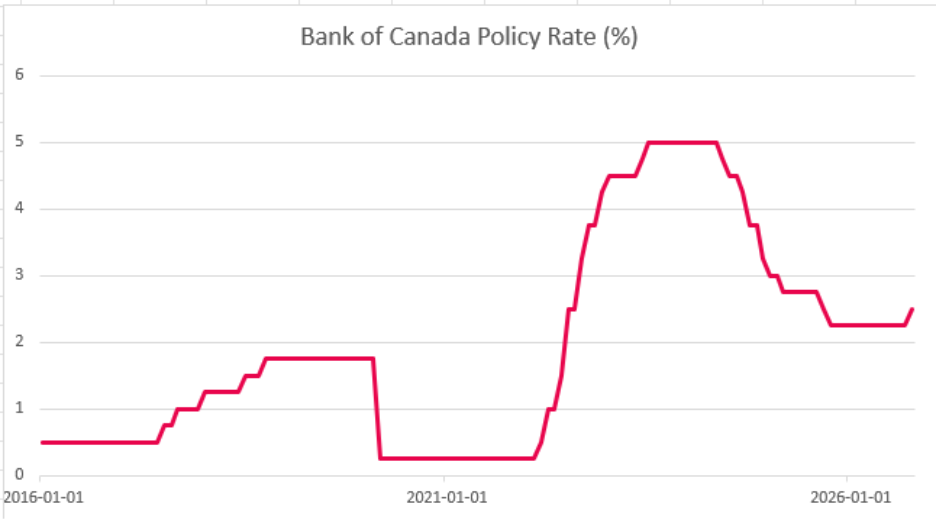
The Bank increased its policy rate by 25 basis points to 2.50%, its first increase since 2023.
What makes this interesting is that underlying inflation is still relatively contained. Headline inflation has been around 3% since April, largely reflecting higher energy prices. Excluding gasoline, inflation was 2.2% in September, and core measures remain close to 2%.
So why raise rates?
The concern is that sustained higher energy and import costs do not stay contained. Higher fuel prices are already raising production and transportation costs, while imported industrial and electronics input prices have also increased. Businesses have absorbed much of those higher costs so far, but the Bank expects more of them to be passed on to customers. In other words, the Bank is effectively trying to stop a cost shock from becoming a broader inflation problem.
That creates an uncomfortable combination for households: the possibility of higher prices and higher borrowing costs. Higher borrowing costs are landing when many households have limited room to absorb another expense. Canadian households were already directing 14.5% of disposable income to required debt payments in Q2, while the household saving rate was just 3.7%. This is the opportunity cost of higher rates: every additional dollar devoted to servicing debt is a dollar that cannot be spent or saved elsewhere
For small businesses, there are two sides to the squeeze. Their own borrowing and input costs are rising, while some of their customers have less discretionary income to spend. That makes passing higher costs on to customers more difficult, even as the pressure to do so increases.
I will be watching three things closely: whether energy and import costs spread into broader prices, whether businesses increasingly pass those costs through, and whether short term inflation expectations continue rising.
So today's 25 basis points is a hit. But the real vulnerability is what happens next. Every increase leaves stretched household and business budgets with less room to absorb another one.
Vancity is a values-based financial co-operative serving the needs of its 588,000 member-owners and their communities, with offices and more than 60 branches located in Metro Vancouver and Squamish, the Fraser Valley, the Sunshine Coast, the Vancouver and Gulf Islands and Alert Bay, within the territories of the Coast Salish and Kwakwaka'wakw Peoples. With $42.4 billion in assets plus assets under administration, Vancity is Canada's largest credit union. Vancity uses its assets to help improve the financial well-being of its members while at the same time helping to develop healthy communities that are socially, economically, and environmentally sustainable.
